
New starters decide how they feel about a job in the first few days, often the first few hours. A welcome pack is one of the cheapest, highest-leverage ways to shape that feeling. Done well, it tells someone "we planned for you" before they've opened a single laptop ticket.
Here's how Australian businesses are building welcome and onboarding kits in 2026, what actually goes in them, and how to avoid the most common first-week fumbles.
You'll also see these called onboarding kits, new starter packs, or (for larger events) swag bags. If you're piecing together which term applies to you, see our guide to what's actually different between them.
Why welcome packs matter more than they used to
Hybrid and remote work stripped out a lot of the informal onboarding that used to happen naturally, a tour of the office, someone walking a new hire to lunch, a desk that was already set up. A welcome pack fills some of that gap physically: it arrives before day one, it's tangible, and it signals effort in a way a Slack message can't.
For distributed teams especially, a welcome kit is often the only physical touchpoint a new employee has with the company in their first week. That's a lot of weight for a cardboard box to carry, which is why what goes inside it matters.
What to actually put in an onboarding kit
The best welcome packs balance three things: something useful, something wearable, and something that feels considered rather than generic.
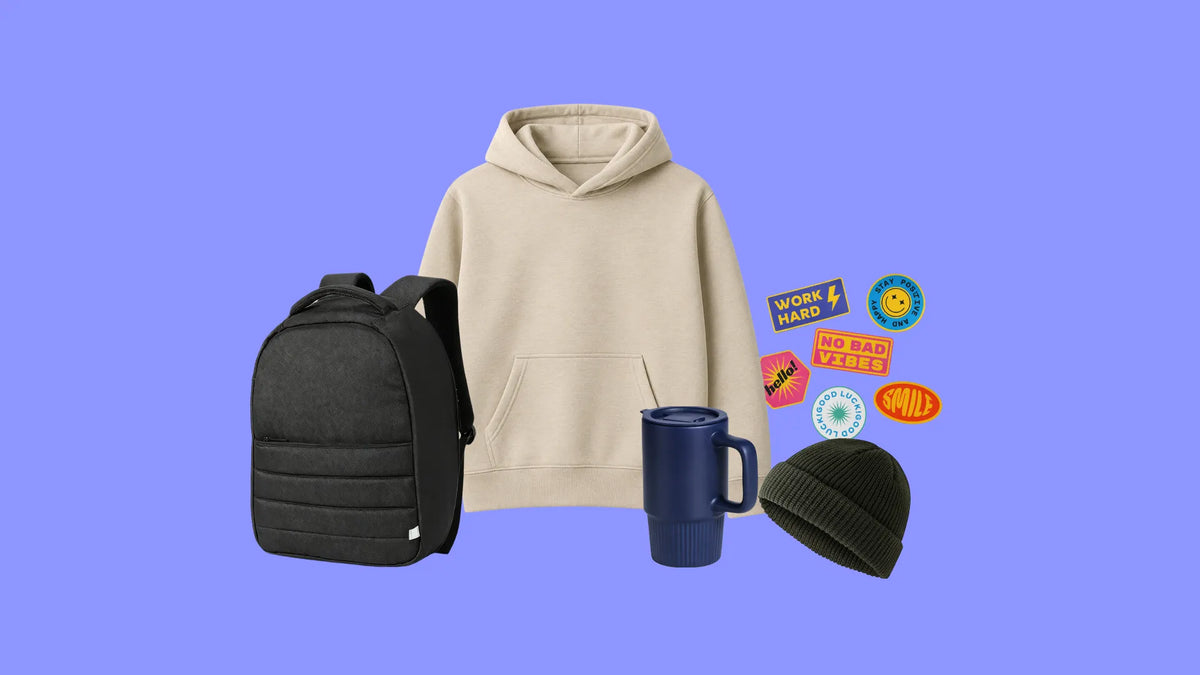
Apparel. A branded cap, beanie, or hoodie is the most common anchor item, it's visible, it's wearable outside work, and it doubles as low-key brand marketing. Beanies and caps also work well because they're one-size-fits-most, which simplifies fulfilment for a distributed workforce.
Drinkware. A branded mug, tumbler, or reusable coffee cup is the second most common inclusion, and for good reason, it gets used daily, sits on a desk in every video call, and is genuinely useful rather than just decorative.
Everyday carry. Tote bags, laptop sleeves, and notebooks round out a kit without pushing the budget too far. These items skew practical, which matters if you want the kit used rather than left in a drawer.
Something personal. A handwritten note, a manager's welcome message, or a small local touch (an Australian-made snack, a gift card to a nearby café) is what separates a kit people remember from one that reads as corporate filler.
A simple starting structure:
-
One wearable item (cap, beanie, or tee)
-
One drinkware item (cup, mug, or bottle)
-
One practical item (notebook, tote, or laptop accessory)
-
One personal touch (note, local treat, or small extra)

Getting the timing right
The single most common mistake with onboarding kits isn't what's in them, it's when they arrive. A welcome pack that turns up on day three has lost most of its impact. The kit needs to land before or on day one, which means:
- Confirming a new starter's shipping address at least two weeks out
- Building in buffer time for branding and printing, not just shipping
- Having a fallback plan (a kit waiting at the office, or an e-gift card) if a start date moves

For companies hiring regularly, batching production, ordering a quarter's worth of kits at once is usually cheaper and more reliable than one-off orders every time someone signs.
Branding without overdoing it
A kit covered edge-to-edge in logos reads as merch, not as a gift. The items that get kept and used long-term tend to have subtle branding, a small embroidered logo on a cap, a single-colour print on a mug, rather than a company name shouted across every surface. Save the bold branding for one "hero" item, and keep the rest understated.
Remote and hybrid considerations
If your team is distributed across states or working from home full-time, a few things change:
- Shipping logistics become the main constraint, not budget, build in more lead time
- Sizing (for apparel) needs to be collected in advance, since there's no in-office swap option
- Consider including something that supports a home setup specifically, like a laptop stand or desk accessory, alongside the traditional wearable/drinkware combo
A quick checklist before your next order
-
Start date confirmed and lead time accounted for
-
Shipping address collected (home address for remote starters)
-
Sizing collected if apparel is included
-
One "hero" branded item chosen, rest kept understated
-
A personal note or local touch included
-
Fallback plan in place if the start date shifts
The takeaway
A welcome pack doesn't need to be elaborate to work, it needs to arrive on time, feel considered, and include at least one thing people will actually use. Get those three right and the box does more for day-one morale than most onboarding decks ever will.
Wumble merch builds custom employee onboarding kits and welcome packs for Australian businesses, sourcing, branding, and delivery handled end to end, with nothing shipped until you've signed off. Get in touch to put together a kit for your next starter.
Share:
Why Eco-Friendly Merch Matters Now More Than Ever
Sustainable Corporate Gifts: A Guide to Eco-Friendly Merch